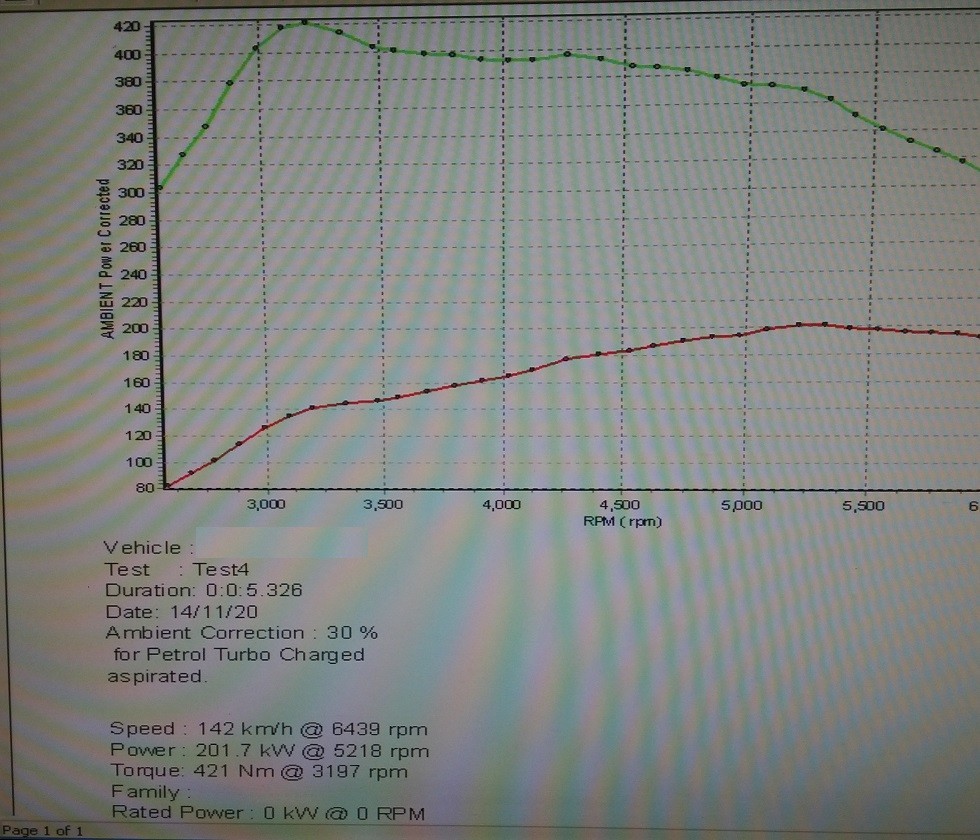
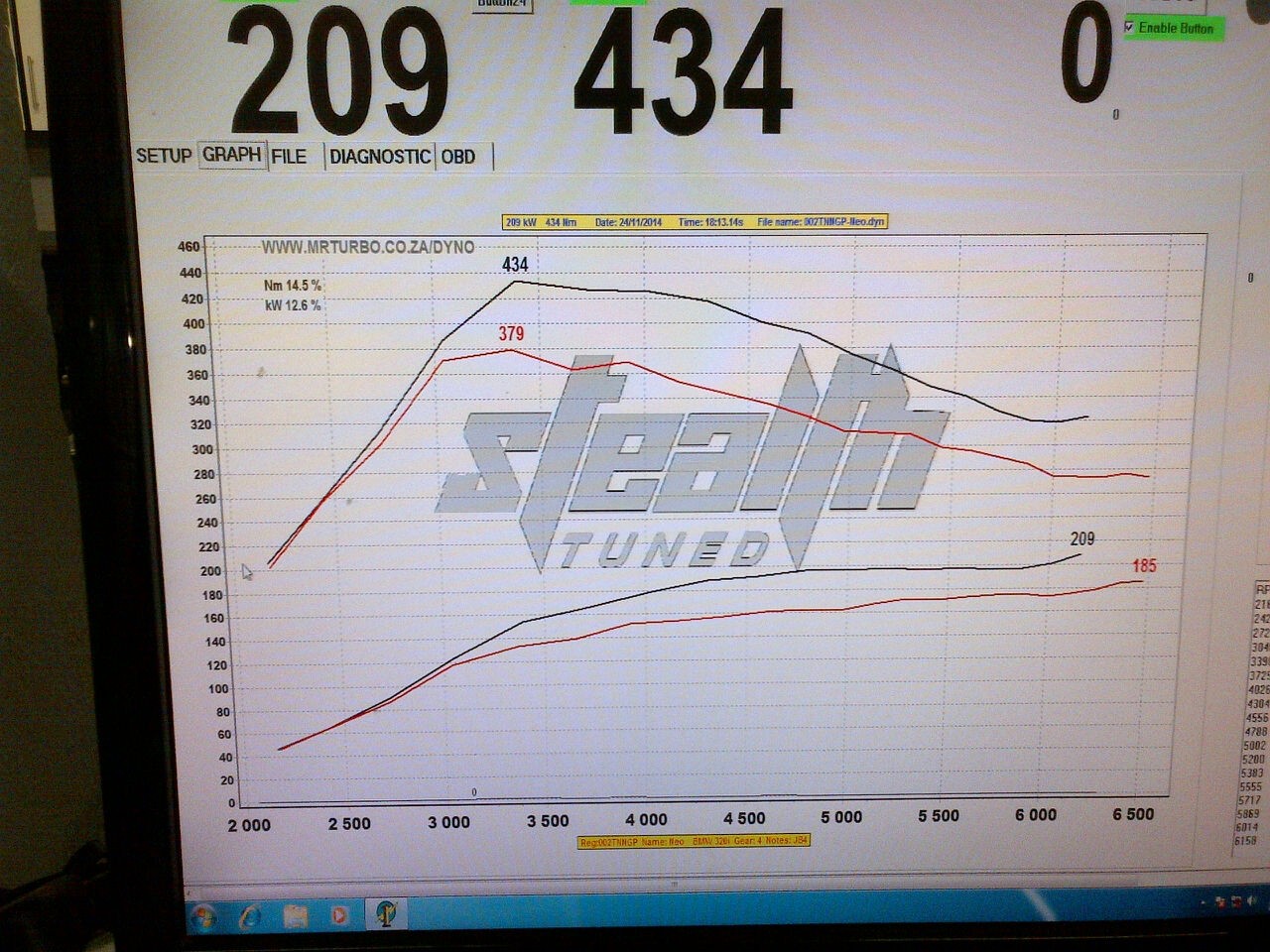
This is posted in the spirit of generating debate and imparting knowledge.
All credit to forum user "sjs" of the VW CSA.
Dynos Don't Lie. Or Do They?
By Shiv S. Pathak
Altitude
...While this correction amount is reasonably accurate in some cases, it is notoriously optimistic in the case of turbocharged engines. In such engines, power output rarely falls as dramatically in response to air density reduction. This is due to their turbo control systems that combat air density reductions by allowing for higher boost pressures. These increased boost pressures can almost completely offset the ambient pressure reduction and make the "altitude correction" almost completely unnecessary. However, I have yet to see a high-altitude tuner come forth and not apply the positive correction factor when displaying their grossly optimistic dyno results.
Humidity
Similar issues arise with changes in humidity...However, as with altitude, not all cars react to humidity changes the same way. For example, a naturally aspirated car may behave as predicted by the smarty-pants that derived the correction technique. But a heavily turbocharged may behave exactly opposite to the rule. Turbocharged cars, unlike naturally aspirated cars, often operate right up to their knock (also known as detonation) thresholds. When humidity rises, the extra water content in the air charge actually acts as a passive cooler of sorts, lowering in-cylinder temperatures just enough to allow for a few more degrees of ignition advance without the presence of detonation. In other words, whatever engine output is lost through the reduction in oxygen content is gained (and then some) through a significant bump in thermal efficiency (caused by operating with more ignition advance). Voila-another improperly applied correction factor!
Temperature
...Turbocharged cars may, in fact, make less power when ambient temperatures drop beyond a certain point. This is often caused by lean-run conditions induced by the increase in air density. Running with the leaner air/fuel ratios, a turbocharged car may run into detonation, which will result in spurious knock sensor activity. Before you know, it several degrees of ignition advance is yanked out and power suffers measurably. This situation is not uncommon in cars, like the WRX, that have their intake temperature sensors placed before the turbo (in the Mass Air Flow sensor) and not just before the throttle body. Latter placement provides a much more accurate indication of in-cylinder air temperatures, allowing the engine management computer to respond with proper fuel and timing compensations.