Things seldom go according to plan—or rather, with a build like this, nothing ever goes according to plan!
With the original ABS removed, a new gremlin emerged—one I had never expected. The DME went into limp mode and limited the engine to 5,000 rpm.
In a nutshell, the DME requires a vehicle-speed signal from the original ABS system. It uses this signal as part of the engine’s torque-management and traction-control functions. Without that input, the DME decided something was wrong and limited the engine.
I basically had two options:
- Reconnect the original ABS unit to fool the DME into thinking the system was still active. Unfortunately, without the wheel-speed sensors connected, the ABS unit was clever enough to see through my plan, and the 5,000 rpm limit remained.
- Remap the DME software to eliminate its dependency on the original ABS input. This sounded simple enough, but it proved to be anything but simple. With the help of two ECU tuners, we downloaded the ECU map, made changes and reloaded it—but it made no difference.
After chatting to a few guys from the BMW Club, I eventually ended up with Michall from TuneTech in Johannesburg.
The car was tuned and revved cleanly to 6,500 rpm on the dyno. Happiness!
Unfortunately, that happiness was short-lived. On the first track test, the engine once again refused to rev beyond 5,000 rpm. The frustration was huge, because we simply couldn’t understand why it worked perfectly on the dyno but not on the track.
The car went back to Michall. After a week of testing and repeatedly running the V8 on the dyno, he eventually discovered a corrupted file in the ECU, triggered by the missing ABS input. We had finally identified the real problem, but it took another full day to bypass that file successfully.
I collected the car yesterday and took it for a quick test down the road outside his workshop.
Magic—it revved cleanly to 6,500 rpm!
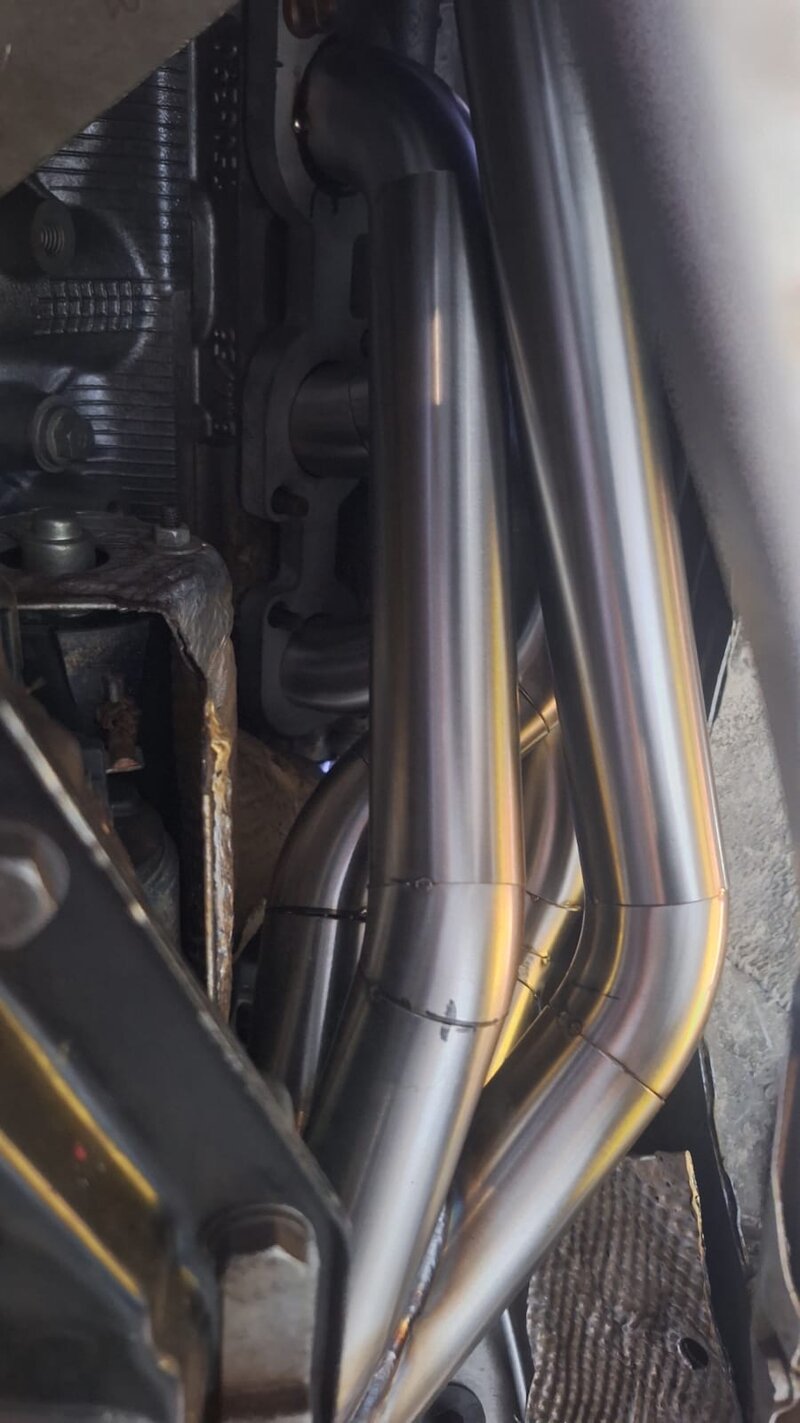
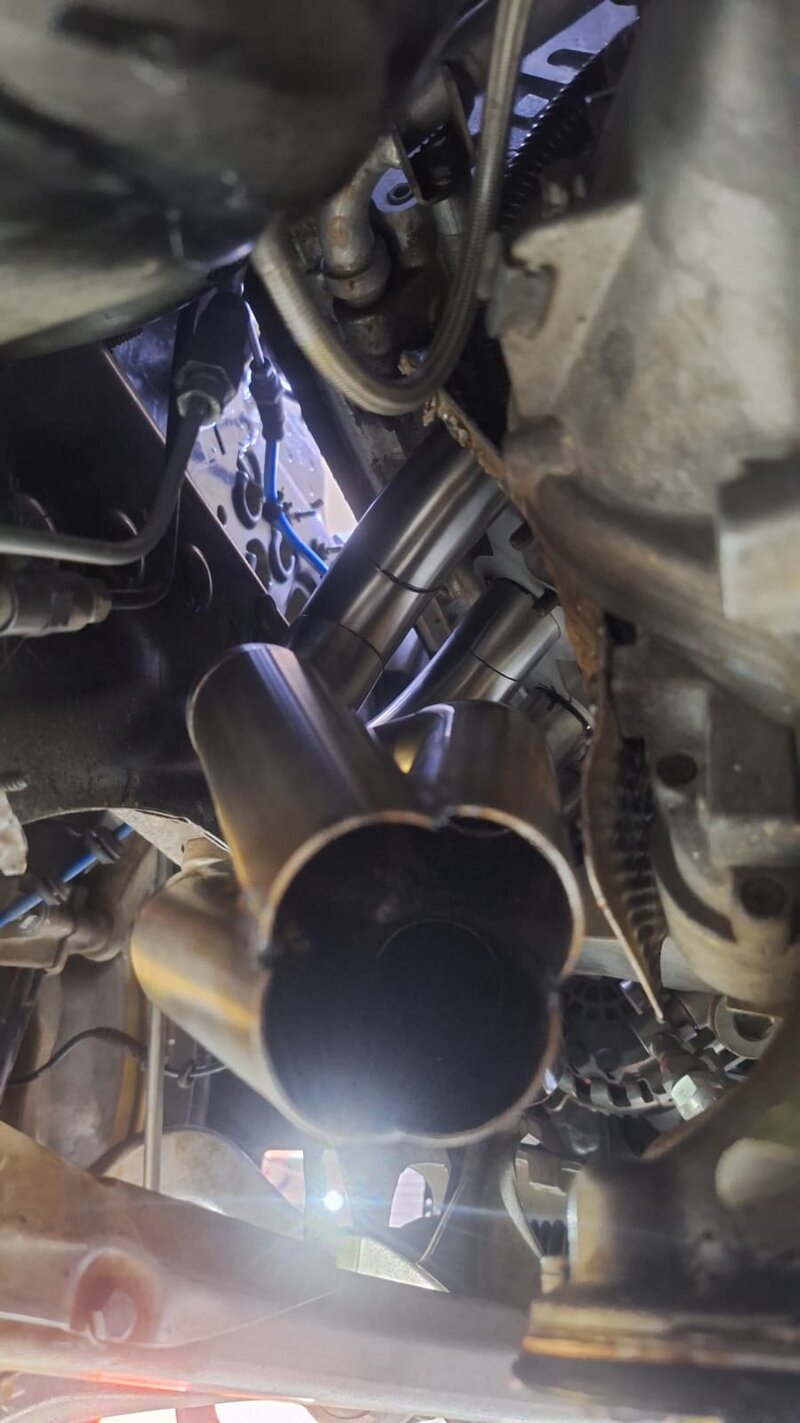
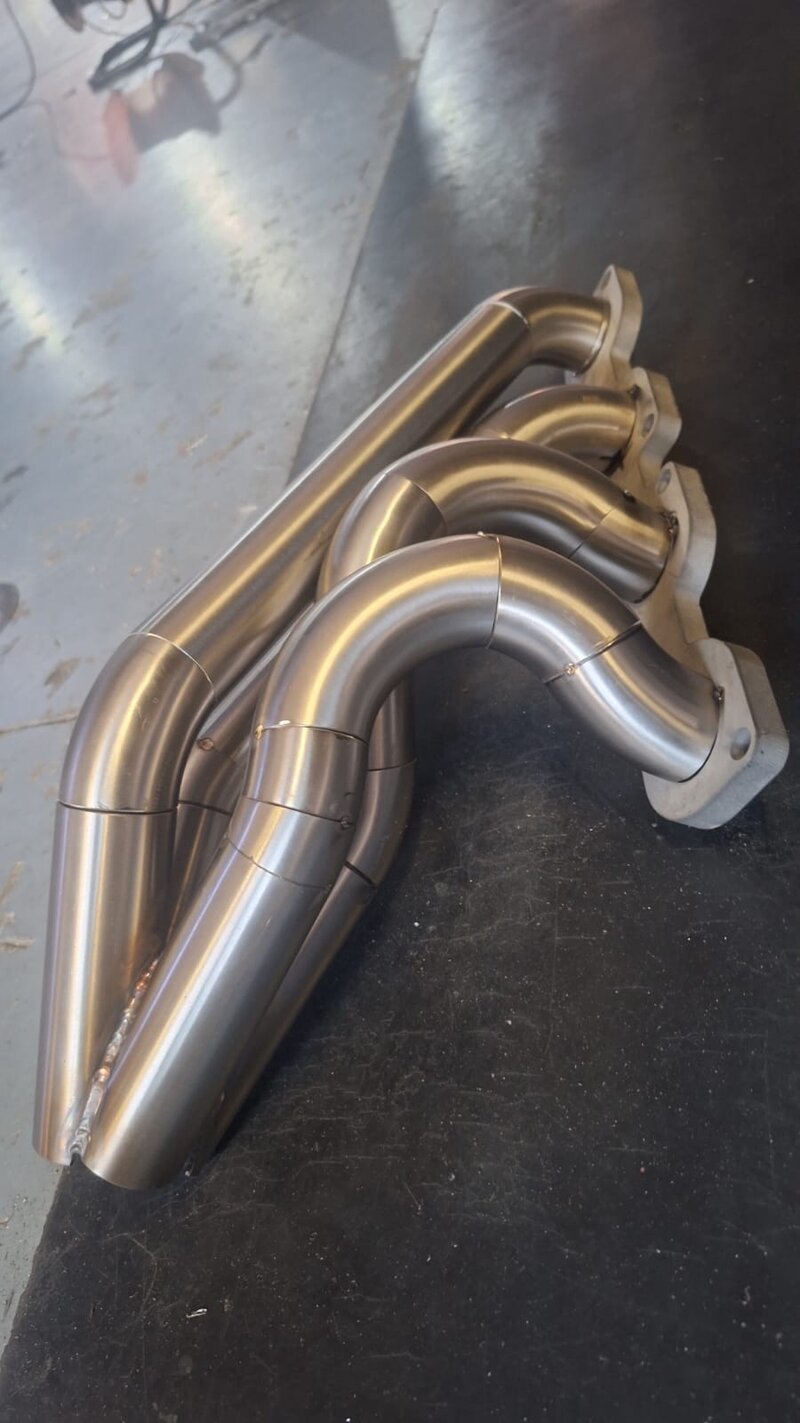
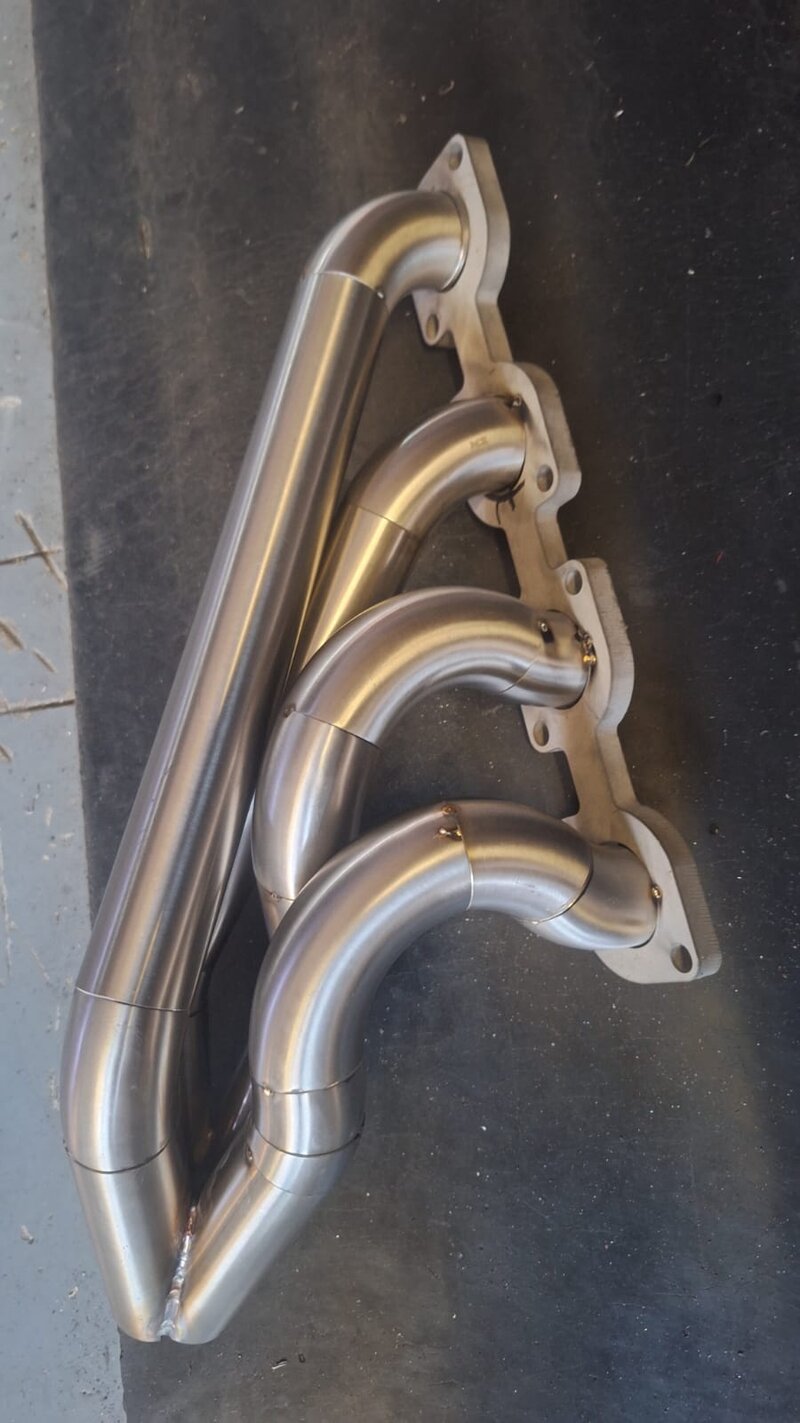
While the car was standing and waiting for space in Michall’s workshop, I used the opportunity to have a set of custom exhaust branches made.
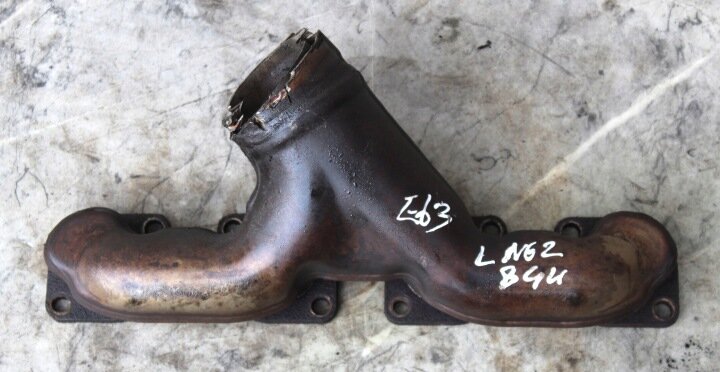
Until now, the car was still running the original N62B44 exhaust manifolds, which, in my opinion, were designed in conjunction with the same engineer responsible for the Model T Ford exhaust system. They are simply horrible! See attached photos
Those manifolds were also largely responsible for the old-school sound of the exhaust. The engine sounded as though it never revved beyond 5,000 rpm—even when it previously did reach 6,500 rpm, before the limiter problem started.
I've used Stephan de Villiers from MOT Fabrications in Centurion to build the new system. I can honestly recommend him to anyone needing a specialized exhaust build.
At this stage from the branches, have twin 63mm pipes through a X-pipe into 2x 63mm silencers and the Y-pipe joining the twin 63mm pipes into a single 89mm single exit side pipe.
Im debating, should I keep this or remove the Y-pipe and run 2x 63mm or 76mm side exit pipes, more historically correct from the E9 Batmobile and similar BMW's.
I haven’t tested the car on track with the new headers yet, but it already sounds completely different. I’ll post videos of the new sound as soon as the car is back on track!