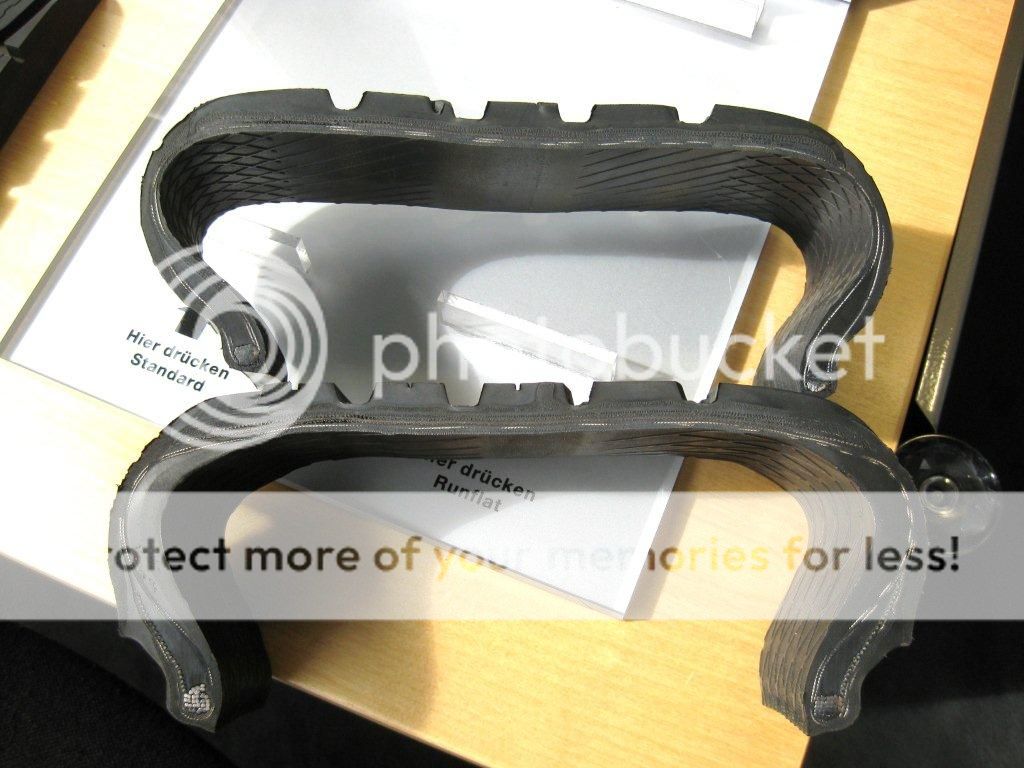
Run flat v normal tyre

P

petrivanzyl

Guest
Just in case you haven't see such an image yet:
IMG_3620-1.jpg

After seeing this for the first time I really got some respect for those RFTs.

This is what happens with the sidewalls in comparison:
fig_2.jpg
 

Philip Foglar

///Member
Yep, the technology is getting better and better as time goes on, and am really impressed with the feel of the new F30's with the newer RFT tyres - really smooth and comfortable compared to the E90. Drove the F30 328i Sportpack and it was soooo much more comfortable and smooth compared to my non-Sportpack E90!!! :thumbs:
 

Sankekur

///Member
Now can we have a pic of the "magic" that is inside the runflat (that leaks out when you have a puncture)............cause that is the only reason I can think of looking at the first pic why guys would refuse to plug a runflat.
 

AshG108

///Member
Sankekur said:
Now can we have a pic of the "magic" that is inside the runflat (that leaks out when you have a puncture)............cause that is the only reason I can think of looking at the first pic why guys would refuse to plug a runflat.

which magic do you refer to,, the repair kit gel?
 

Sankekur

///Member
lol sorry, being a bit sarcastic :rollsmile:

If you look at the cross section of both tyres, they are pretty much the same, the runflat is just thicker, so if in a situation with a normal tyre and it can be fixed, there is no reason that the runflat can't be fixed either, they are both tyres after all, the one is just thicker and stronger.
 

Philip Foglar

///Member
Sadly these tyre places are able to "convince" most people to rather replace a punctured RFT than plug it. And then you have the all too common unevenly worn or unmatched tyres on the same axle - since in most cases these people will only replace the punctured tyre.

My logic, if a normal tyre can be plugged, then a RFT is the better of the two to plug in the first place - let's say the repair fails suddenly and allows the air out, I'd rather that happen on RFT's. Okay this is a rare case I would imagine, but with a RFT you have the added safety of the thicker and stronger sidewall, plus with the rim design there is a better chance that the sidewall of the RFT WILL stay on the rim and aid in maintaining control of the car.

But, regardless of tyre type, a puncture repair is always going to be a risk, and requires frequent inspection to make sure that all is fine, no bulging or cracks forming etc...
 
Top