Navigator_E90
Well-known member
It has been some time since my last technical update, so I’m splitting it into two posts.
The first covers the ABS problems, testing and our solution. The second will cover this weekend’s racing and the issues we experienced—because there is never a clean race weekend without an incident!
I replaced it with a standalone MK60 system from an E46 BMW. It is simpler to manage and doesn’t have all the additional systems connected to it.
The first problem was that the engine DME depended on information from the original ABS. It took a few trips to Tune Tech in Johannesburg to get the engine running without triggering a low rev limiter, but that was eventually sorted.
Then the MK60 headaches started.
The system worked independently, but it was extremely sensitive. Almost any hard braking activated the ABS pump too early and increased the stopping distance.
I also tested the car without ABS. With the new pedal box and adjustable brake bias, the pedal feel is unreal. The car is completely drivable without ABS and the braking performance is excellent. It might not be quite as fast or consistent as a properly functioning ABS system, but it is close.
We checked the live data from all four wheel-speed sensors. All four matched, so an individual sensor was not the problem.
I then drove the car slowly around the block. I didn’t want to attract unnecessary attention because the car is obviously not road legal.
When I checked the diagnostic data afterwards, it showed that I had reached almost 80 km/h—even though I had only been crawling around!
I repeated the test using my phone’s GPS to compare the actual road speed with the ABS reading.
The ABS was reading approximately 2.1 times faster than the true speed:
At a true speed of 150 km/h, the ABS thinks the car is travelling at approximately 315 km/h. When braking from 150 km/h down to 80 km/h over roughly 50 metres, the ABS sees the speed dropping from approximately 315 km/h to 168 km/h over the same distance.
That rate of deceleration is physically impossible—not even an F1 car could achieve it. The ABS therefore assumes that all four wheels are locking and the car is sliding, causing it to intervene far too early and potentially enter ice mode.
This was very similar to the problem experienced with the original ABS system.
The solution was clear: we needed to make the MK60 read a more realistic wheel speed.
Each wheel normally has a trigger ring containing a specific number of teeth or slots. The ABS sensor reads these as the wheel rotates and converts the pulses into wheel speed.
We tried manipulating the electronic signal, but that didn’t work reliably. The E63 trigger rings are also built into the sealed wheel bearings, so modifying them was not practical.
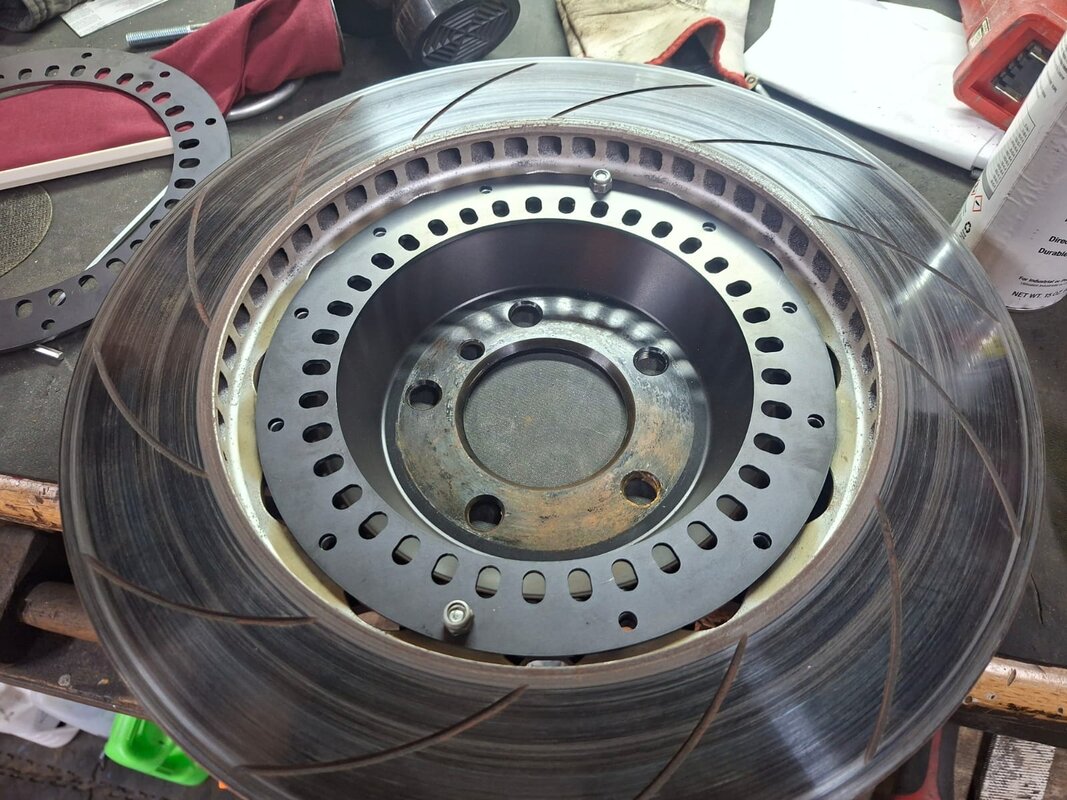
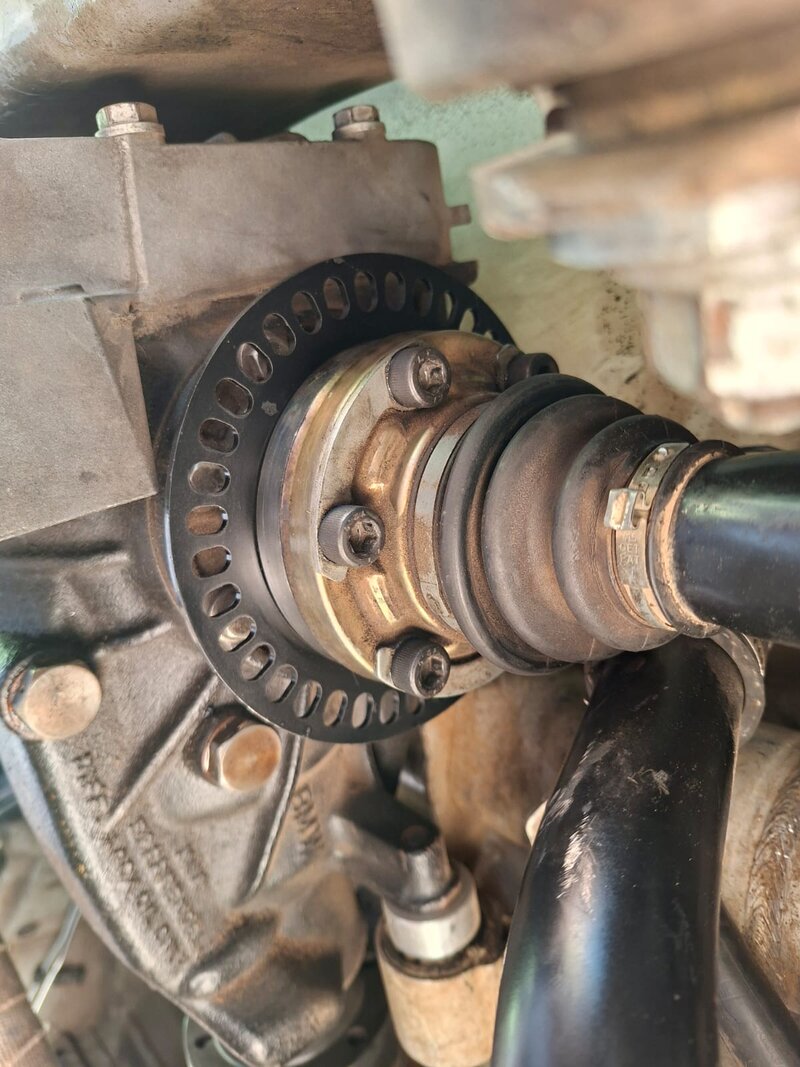
I therefore designed new external ABS trigger rings and used E46 wheel-speed sensors. I calculated the number of slots so the MK60 would read approximately 20% below the car’s true speed.
Why deliberately make it read slower?
A normal road-going E46 might generate around 0.8 G under braking. The E12 is lighter and has large racing brakes, aggressive pads and semi-slick tyres, allowing it to brake at around 1.3 to 1.4 G.
With the ABS reading approximately 20% slower, braking from a true 150 km/h to 80 km/h would appear to the system as roughly 120 km/h to 64 km/h. The calculated deceleration should then remain closer to the operating range for which the MK60 was designed.
That was the theory, anyway… Tested the ABS and its works!!
The first covers the ABS problems, testing and our solution. The second will cover this weekend’s racing and the issues we experienced—because there is never a clean race weekend without an incident!
The ABS Saga
The original E63 ABS was removed because it didn’t like track racing and caused a few unpleasant “ice-mode” incidents.I replaced it with a standalone MK60 system from an E46 BMW. It is simpler to manage and doesn’t have all the additional systems connected to it.
The first problem was that the engine DME depended on information from the original ABS. It took a few trips to Tune Tech in Johannesburg to get the engine running without triggering a low rev limiter, but that was eventually sorted.
Then the MK60 headaches started.
The system worked independently, but it was extremely sensitive. Almost any hard braking activated the ABS pump too early and increased the stopping distance.
I also tested the car without ABS. With the new pedal box and adjustable brake bias, the pedal feel is unreal. The car is completely drivable without ABS and the braking performance is excellent. It might not be quite as fast or consistent as a properly functioning ABS system, but it is close.
We checked the live data from all four wheel-speed sensors. All four matched, so an individual sensor was not the problem.
I then drove the car slowly around the block. I didn’t want to attract unnecessary attention because the car is obviously not road legal.
When I checked the diagnostic data afterwards, it showed that I had reached almost 80 km/h—even though I had only been crawling around!
I repeated the test using my phone’s GPS to compare the actual road speed with the ABS reading.
The ABS was reading approximately 2.1 times faster than the true speed:
- ABS speed: 80 km/h
- Actual GPS speed: approximately 38 km/h
At a true speed of 150 km/h, the ABS thinks the car is travelling at approximately 315 km/h. When braking from 150 km/h down to 80 km/h over roughly 50 metres, the ABS sees the speed dropping from approximately 315 km/h to 168 km/h over the same distance.
That rate of deceleration is physically impossible—not even an F1 car could achieve it. The ABS therefore assumes that all four wheels are locking and the car is sliding, causing it to intervene far too early and potentially enter ice mode.
This was very similar to the problem experienced with the original ABS system.
The solution was clear: we needed to make the MK60 read a more realistic wheel speed.
Each wheel normally has a trigger ring containing a specific number of teeth or slots. The ABS sensor reads these as the wheel rotates and converts the pulses into wheel speed.
We tried manipulating the electronic signal, but that didn’t work reliably. The E63 trigger rings are also built into the sealed wheel bearings, so modifying them was not practical.
I therefore designed new external ABS trigger rings and used E46 wheel-speed sensors. I calculated the number of slots so the MK60 would read approximately 20% below the car’s true speed.
Why deliberately make it read slower?
A normal road-going E46 might generate around 0.8 G under braking. The E12 is lighter and has large racing brakes, aggressive pads and semi-slick tyres, allowing it to brake at around 1.3 to 1.4 G.
With the ABS reading approximately 20% slower, braking from a true 150 km/h to 80 km/h would appear to the system as roughly 120 km/h to 64 km/h. The calculated deceleration should then remain closer to the operating range for which the MK60 was designed.
That was the theory, anyway… Tested the ABS and its works!!